

Next up in our series exploring the hidden drivers of fatigue is Small Intestinal Bacterial Overgrowth (SIBO).
When we think about SIBO, digestive symptoms such as bloating, abdominal discomfort and food sensitivities often come to mind. But SIBO is not always simply an issue isolated to the digestive system.
For some people, it may act as a whole-body stressor.
SIBO occurs when excessive numbers of bacteria are present in the small intestine. These bacteria can interfere with digestion and nutrient absorption, while also producing by-products that may place additional stress on the immune, metabolic and nervous systems.
The ripple effects can potentially include fatigue and reduced energy production, brain fog and difficulty concentrating, anxiety or sleep disruption, immune activation and histamine reactions and bloating, pain and food sensitivities.
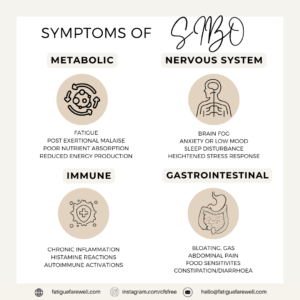
For someone already experiencing chronic fatigue, these additional stressors may matter.
Poor nutrient absorption, for example, may make it more difficult to maintain adequate levels of nutrients involved in energy production. Ongoing digestive dysfunction may also contribute to inflammation and immune activation. In susceptible individuals, bacterial by-products and histamine-related reactions may further influence the nervous system, sleep and overall resilience.
Importantly, not everyone with SIBO experiences obvious digestive symptoms. While bloating and abdominal discomfort are common, some people may notice fatigue, cognitive symptoms or food reactions as part of a broader picture.
This does not mean that SIBO is the cause of every case of chronic fatigue. Fatigue is complex and can have many contributing factors. However, when someone has persistent fatigue alongside digestive symptoms, food sensitivities or signs of gut dysfunction, SIBO may be one piece of the puzzle worth investigating.
At CFSFree, recovery is not about chasing individual symptoms or searching endlessly for a single magic bullet.
It is rather about looking at the bigger picture and supporting the systems that influence health: the gut, nervous system, immune and toxic load, structure and energy production.
Usually, uncovering and addressing hidden contributors is part of what allows the body to move closer to recovery.
You can find other ME/CFS related blogs here.

Shaun Moran